For students
A quieter place for research, links, todos, videos, and the people you meet
Relay gives students a distraction-light workspace for saving useful things, organizing projects, and remembering new relationships without living inside a social feed.
Dogfooded proof
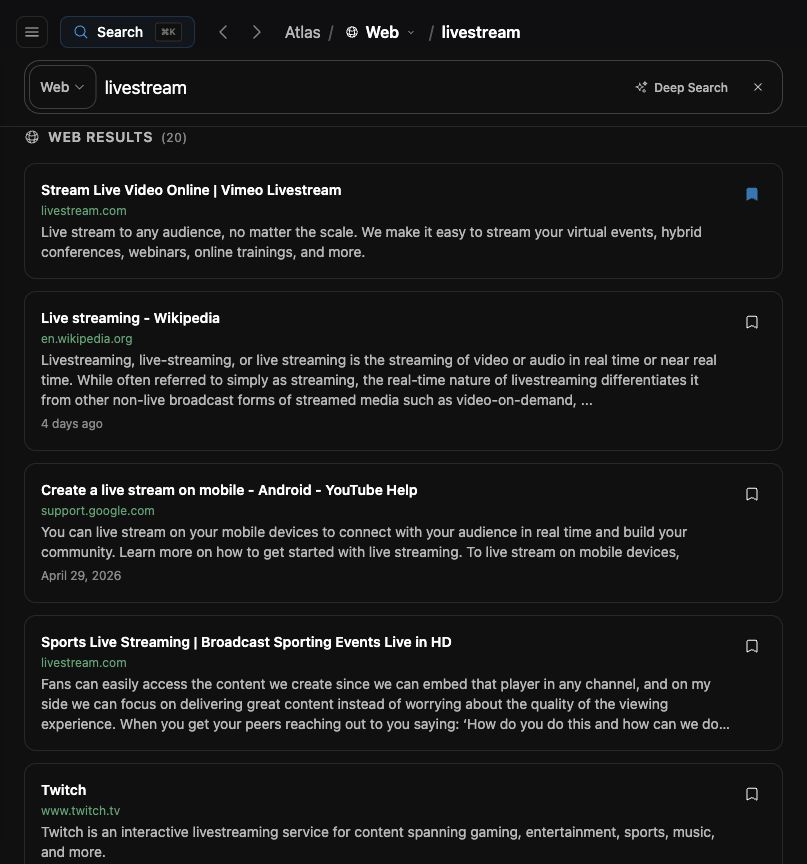
Search the web, save the useful result, keep moving
Atlas search and Save to Relay were dogfooded locally. The goal is simple: fewer lost tabs, fewer algorithmic rabbit holes, and more useful memory.
Distraction-light video discovery
Search and organize videos as study material instead of falling into the next recommended feed.
Links with context
Save articles, videos, tools, and references next to projects, todos, contacts, and notes.
People you meet
Remember classmates, professors, mentors, club leaders, and friends with notes that stay private to you.
Use cases
Student workflows Relay supports
Relay is for students who want useful organization without turning every relationship into content.
Research projects
Collect links, videos, notes, people, deadlines, and drafts around one class or thesis topic.
Todos and contacts
Keep assignments and follow-ups beside the people or resources that matter.
College memory
Remember names, interests, conversations, and next steps without posting everything somewhere public.
Playbook
A calmer study loop
Relay should help you gather, decide, and act without feeding distraction.
Search
Use Atlas for web, video, person, and topic discovery.
Save
Turn useful results into Relay links, videos, notes, or projects.
Arrange
Put resources on a canvas or in a collection that matches the class.
Act
Attach todos and people so follow-through is part of the same workspace.
Capacity
Relay is built for the relationships you cannot afford to forget
Dunbar's number is useful as a starting map, but Relay uses Circles as something you can correct: closeness, urgency, and cadence stay separate.
Circles
Dunbar, made correctable
Relay treats relational capacity as a living map, not a hard ceiling. You can correct the circles, then Relay uses that context to decide who needs attention.
Closeness
Who belongs in which relational layer.
Urgency
Who needs action, prayer, help, or follow-up now.
Cadence
How often each relationship deserves a real touchpoint.
Build a personal workspace that remembers with you
Start with links and todos, then add people, projects, notes, and public profile pieces when you are ready.