For pastors
Pastoral care without losing people in the margins
Relay helps pastors and shepherding teams see who needs attention, attach tasks to care moments, and remember the human context behind every follow-up.
Dogfooded proof
Start each week with the relationships that need care
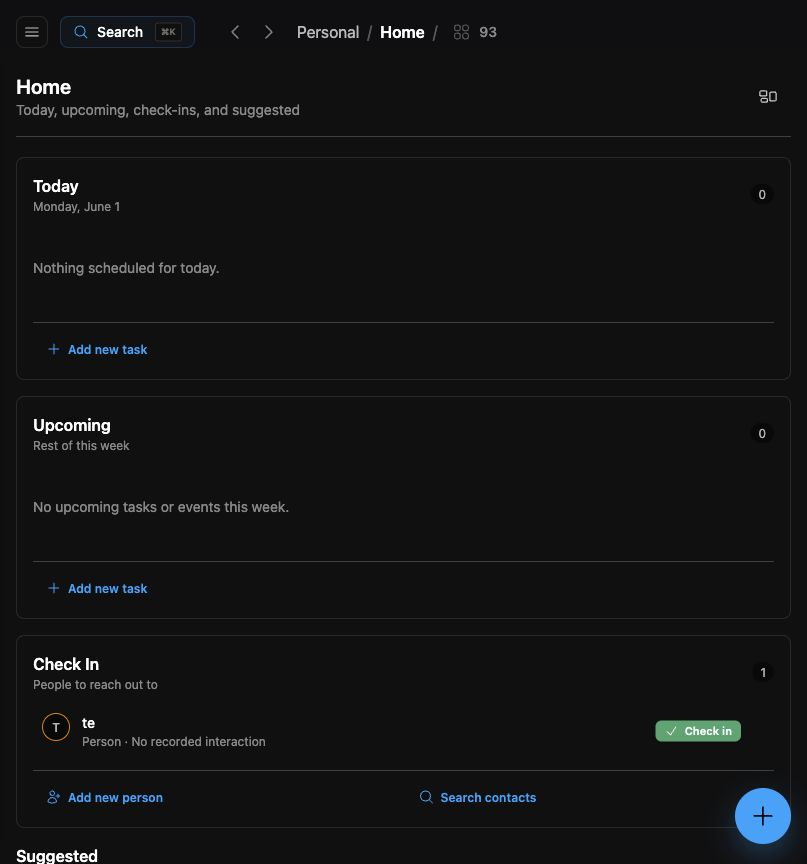
The home dashboard and attention feed were dogfooded locally. Relay can surface people, tasks, and recent context in one place so a pastor starts with care, not a blank search box.
Shepherd Tone
Suggestions focus on people who may need a touchpoint, not just records that changed.
Tasks with context
Follow-up work can live next to the person, note, event, or group that created it.
Journeys
Track where people are in discipleship, membership, care, onboarding, or serving pathways.
Use cases
Pastoral workflows Relay is shaped for
Relay is not a sales CRM with church words painted on it. It is built around remembering people, sharing care, and acting with context.
Care lists
Keep members, visitors, volunteers, elders, and small-group leaders connected without burying them in spreadsheets.
Follow-up cadence
Let Circles and recent touchpoints help decide who needs a call, visit, text, or prayer note this week.
Delegated care
Compose groups, tasks, journeys, and notes so a team can carry the work together.
Playbook
A weekly rhythm
Relay should make pastoral attention feel lighter without making people feel managed.
Review
Open the attention feed and see the 5-9 people who need focus.
Remember
Read notes, prior touchpoints, journeys, and tasks before acting.
Reach out
Make the call, visit, email, or handoff with the person in view.
Log context
Capture the outcome so the next touchpoint starts warmer.
Capacity
Relay is built for the relationships you cannot afford to forget
Dunbar's number is useful as a starting map, but Relay uses Circles as something you can correct: closeness, urgency, and cadence stay separate.
Circles
Dunbar, made correctable
Relay treats relational capacity as a living map, not a hard ceiling. You can correct the circles, then Relay uses that context to decide who needs attention.
Closeness
Who belongs in which relational layer.
Urgency
Who needs action, prayer, help, or follow-up now.
Cadence
How often each relationship deserves a real touchpoint.
Pastoral care gets easier when memory is shared
Use Relay as a private care workspace first, then invite teammates when the rhythm is ready.